ServicesTile Flooring
Tile Flooring in South Houston
Tile lasts for decades when the floor under it is flat, solid and dry. We start by checking your slab or subfloor, show you what we find, and only then recommend a tile, a prep plan and a layout that fit your home and your budget.
Tile that starts with a look underneath
Porcelain and ceramic tile handle spills, pets, muddy shoes and sticky summers better than almost anything else you can put down. They are also unforgiving. A slab with a ridge, a hairline crack that keeps moving, or a subfloor that flexes will show up later as cracked tiles, hollow spots and loose grout.
So we inspect first. We check flatness with a long straightedge, look for cracks and moisture, and tell you plainly what the floor needs and what it does not. Most homes here sit on concrete slabs, and clay soil can shift them a little over the years, which is exactly why we look before we quote.
We have been in business 25+ years. Most of that experience shows up in what we catch before the first tile is set.
What our tile installation includes
- Slab and subfloor inspection
- We check for high and low spots, map any cracks, and take moisture readings. You get photos and a plain explanation of what we found.
- Removing the old floor
- We pull up carpet, vinyl, laminate or old tile, scrape off leftover adhesive and thinset, and haul the debris away. The slab has to be clean for new thinset to grab.
- Leveling and crack isolation
- High spots get ground down and low spots get filled with self-leveling compound. Where a crack is still moving, we lay a crack isolation membrane so the movement does not travel up into your new tile.
- A layout planned before setting
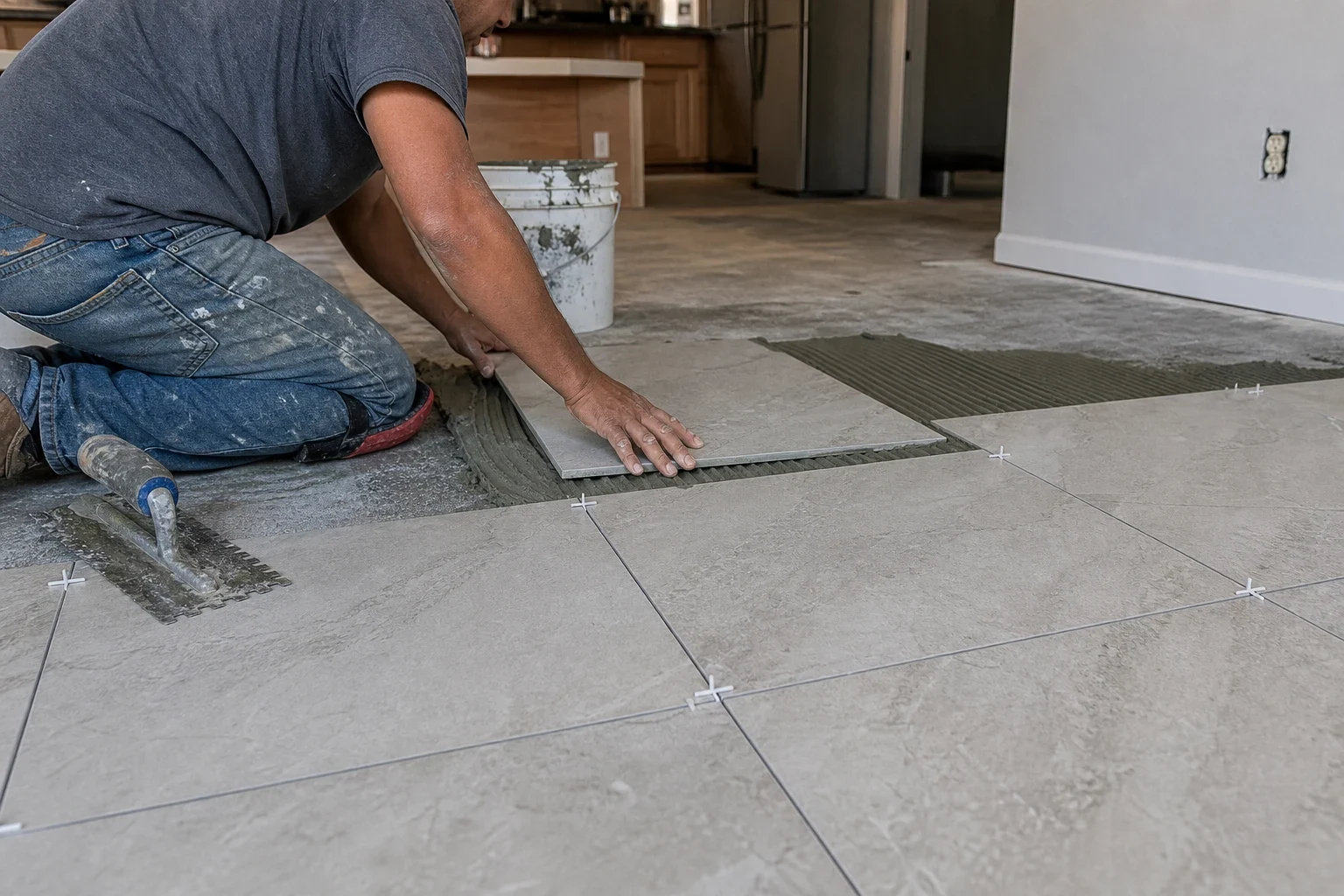
- We dry-lay the tile to center it in the room and avoid thin slivers at doorways and along the most visible walls. This matters most with large-format and wood-look plank tile.
- Setting, grout and transitions
- Large tiles get back-buttered for full coverage, and we use leveling clips to keep edges even. We finish with grout, then clean transitions to your carpet, hardwood or vinyl in the next room.
Signs it is time for new tile
Cracked or hollow tiles
Tap a tile with a coin. A dull, hollow sound means it has come loose from the thinset, and cracks often follow.
Crumbling or stained grout
Grout that flakes out or stays dark lets water reach the setting bed. Regrouting can help for a while, but widespread failure usually points to a bigger problem.
Cracks running in a line
When a crack crosses several tiles in a straight path, the slab underneath has usually cracked. We look at whether it is still moving before deciding how to tile over it.
Edges that catch your toes
Uneven tile edges, called lippage, are a tripping hazard and a sign the floor was not flat when it was set.
Worn flooring in wet rooms
Carpet or older vinyl in a bathroom, kitchen or laundry room soaks up water and smells over time. Tile is often the better fit there.
How a tile job runs
- 1
Inspection and findings
We visit, look at the floor, measure, and talk through how you use the room. Then we tell you what we found in plain terms, including when the floor is in good shape and needs little prep.
- 2
A written plan and quote
Your quote lists removal, prep, tile setting, grout and trim as separate lines. You can see where the money goes before you decide.
- 3
Prep day
We protect nearby rooms, tear out the old floor and handle leveling or crack isolation. Removing old tile is loud and dusty, so we tell you ahead of time what that day will be like.
- 4
Setting and grouting
We set tile from the planned layout, check it as we go, and grout once the thinset has cured enough.
- 5
Cure time and walkthrough
Before we go, we walk the room with you, point out anything to keep an eye on, and clean up the work area. You will know how long to wait before the room is back in full use.
What affects the price of tile flooring
Tile pricing depends as much on the floor underneath as on the tile you pick. That is why we look at your slab before we give you a number. Your quote will show each part of the job so nothing comes as a surprise.
- Tile size and material
- Porcelain is denser and harder to cut than ceramic. Large-format and long plank tiles need a flatter floor and more careful setting, which adds labor.
- Condition of the slab
- A flat, dry slab needs little prep. Grinding, leveling compound or crack isolation membrane each add time and material.
- What comes up first
- Pulling carpet is quick. Removing old tile and scraping thinset off the slab takes much longer.
- Room shape and pattern
- Closets, angled walls, and patterns like herringbone mean more cuts and more waste tile to order.
Tile flooring questions we hear often
Something not covered here? (346) 597-5531
Can you put new tile over my old tile?
Sometimes, but not often. It only works if the old tile is stuck down firmly, flat and not cracked, and the extra height does not cause trouble at doors and transitions. We check during our visit and tell you honestly whether it is a good idea.
My slab has a crack. Will it crack my new tile?
It can if the crack is still moving and nothing is done about it. We check the crack, and where needed we install a crack isolation membrane under the tile to absorb small movement. If a crack looks like a foundation concern, we will tell you so before any tile goes down.
Should I choose porcelain or ceramic?
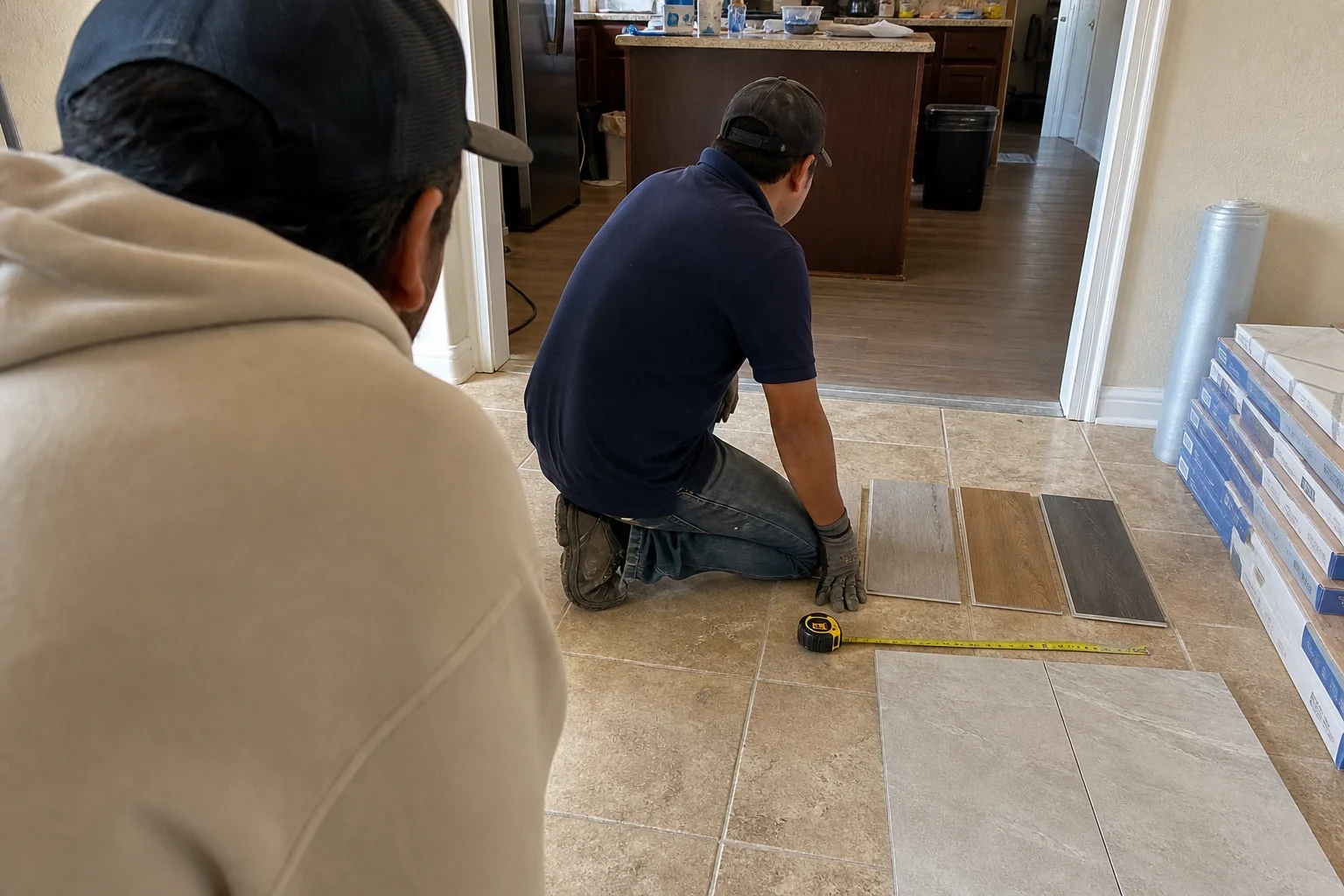
Porcelain is denser, absorbs less water and holds up better in heavy-traffic areas and wet rooms. Ceramic costs less and works well in lighter-use spaces. We can bring samples and talk through how each would do in your room.
How long before we can use the room again?
Plan on keeping off the new tile for roughly 24 hours while the thinset sets up. After that, crossing the room in socks or soft shoes is fine. Hold off a few more days before rolling the fridge back or dragging a heavy couch into place. Products cure at different rates, so we give you the exact wait for your job before we leave.
Do we need to leave the house during the job?
Most families stay home. The removal day is the noisiest and dustiest, so we close off the work area and protect nearby rooms, and some people choose to run errands that day.
Let us take a look at your floor first
Tell us about the room and what is bothering you. We will set a time to come out, show you what we find, and give you a clear quote for your tile.