ServicesHardwood Flooring
Hardwood Flooring in South Houston, Planned Around What We Find
Before we suggest a species, a plank width or an install method, we check what sits under your current floor and measure its moisture. You get a clear picture of what will last in your home, then a hardwood floor installed to match it.
Real Wood, Installed for the Floor Underneath It
Hardwood adds warmth and character that few other floors match, but wood moves. It swells when it takes on moisture and shrinks when it dries out. Most problems we see with failed hardwood come from that movement being ignored, not from bad wood.
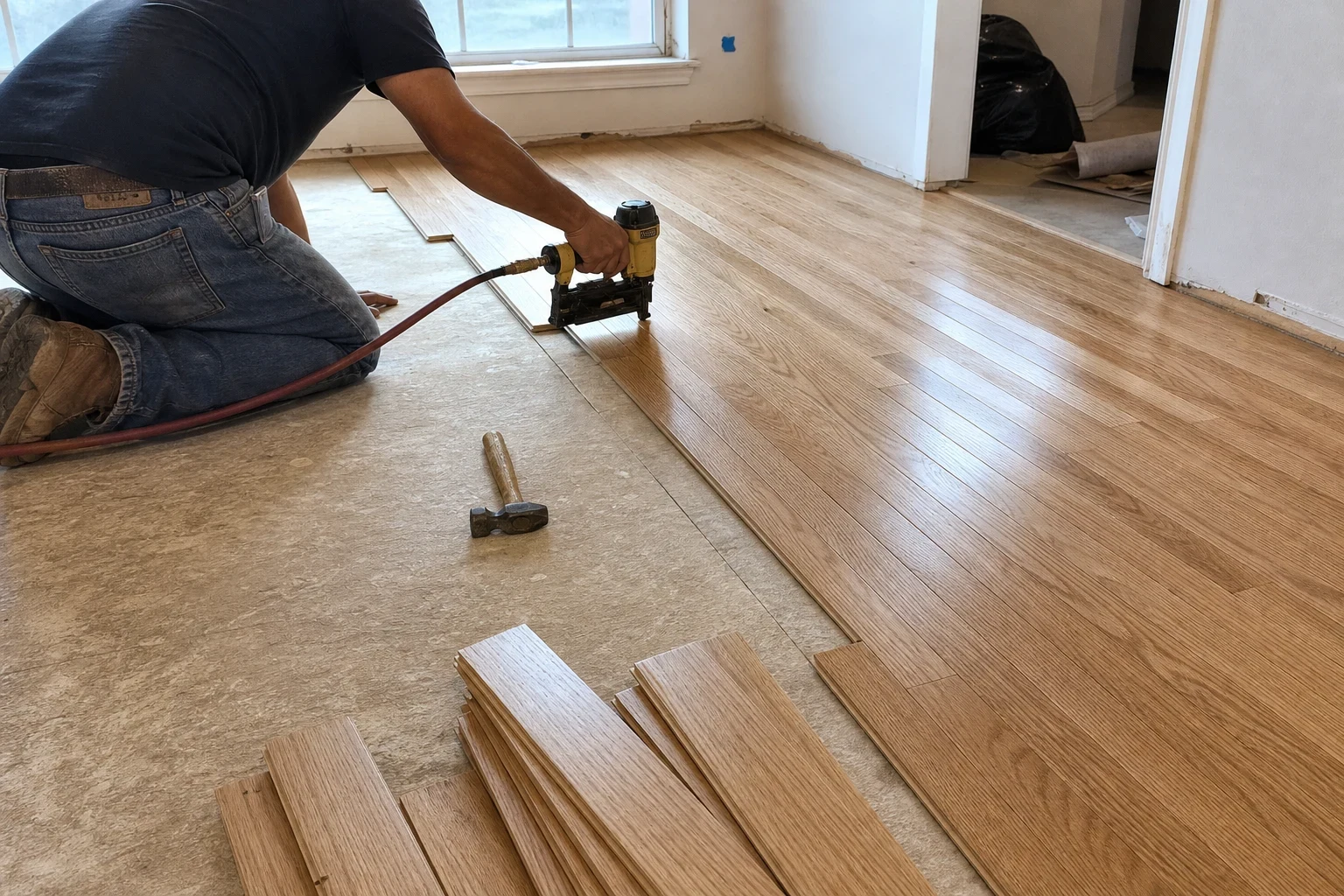
That is why our first visit is an inspection, not a sales pitch. We test the slab or subfloor, check it for flatness and look for signs of past leaks. Many homes around here sit on concrete slabs, and with Gulf Coast humidity, that usually points to engineered hardwood glued down or floated over a moisture barrier. On a wood subfloor, solid hardwood nailed in place is often a good fit.
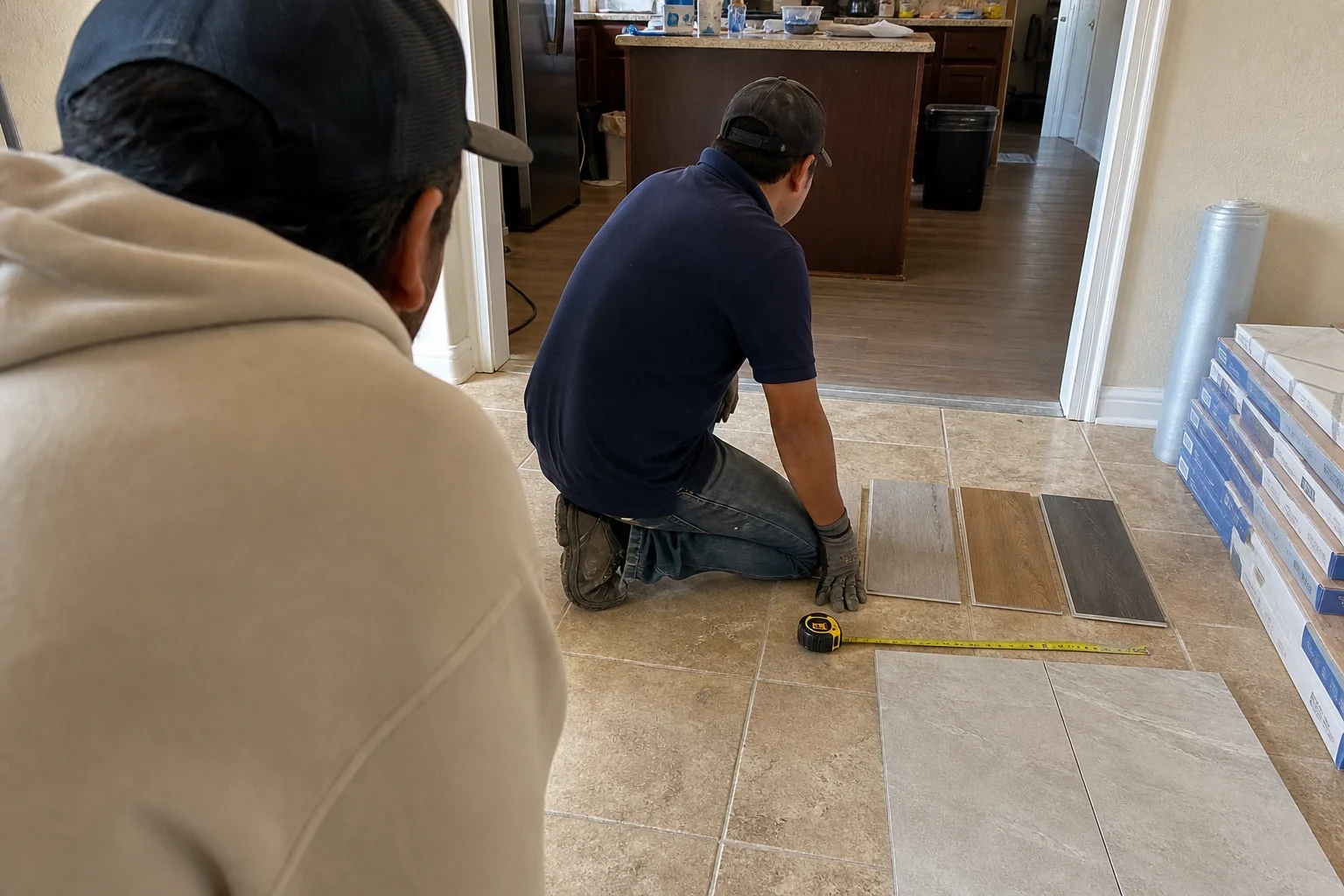
After more than 25 years in business, we have learned that the honest answer is sometimes a different floor. If a room like a laundry or a half bath sees regular water, we will tell you so and talk through luxury vinyl plank or tile flooring instead.
What Your Hardwood Installation Includes
Moisture testing
We measure moisture in the slab or subfloor and in the wood itself before anything is installed. You see the readings and what they mean for your floor.
Tear-out and haul-away
Whatever covers the floor now, from carpet and its padding to sheet vinyl or worn boards, comes up and leaves with our crew. Taking out ceramic tile can be done as well, and we explain the extra dust and time before you decide.
Subfloor prep and leveling
Low spots get filled and high spots get ground down so planks sit flat. Loose plywood is screwed down to quiet squeaks before they start.
The right install method
Nail-down for solid hardwood over wood, glue-down or floating for engineered planks over concrete. We explain why we chose the method for each room.
Trim and transitions
We finish edges with baseboard or quarter round and fit transitions where hardwood meets tile or carpet, so you don't trip on uneven lips between rooms.
Cleanup at the end
Scraps, packaging and debris leave with us, and we vacuum the work area before the final walkthrough.
Signs It May Be Time for New Hardwood
- Cupping or wide gaps
- Boards with raised edges or gaps that never close often mean moisture trouble below. We find the cause first so a new floor doesn't fail the same way.
- Water damage from a leak
- A dishwasher, water heater or plumbing leak can stain and warp boards past saving. We check the subfloor for lingering moisture before replacing anything.
- Worn carpet in main rooms
- Matted, stained carpet in a living room or hallway is a common reason people switch to wood. Hardwood is easier to keep clean and doesn't hold onto pet hair.
- Soft spots or squeaks
- A floor that flexes or creaks underfoot can signal loose or damaged subfloor. That is worth fixing during a new install, not after.
- Floors that don't match
- Three different floors across connected rooms can make your home feel choppy. Running one hardwood floor through the main spaces ties it together.
How a Hardwood Job Runs
- 1
In-home inspection
We measure the rooms, test moisture and look under vents and at door thresholds. Then we sit down with you and explain what we found in plain terms.
- 2
Written findings and estimate
You get a line-by-line estimate that shows materials, prep work and removal separately. If the subfloor needs repair, it is listed, not discovered later.
- 3
Delivery and acclimation
The wood is delivered and left in your home to adjust to the indoor air. We check its moisture again before we start.
- 4
Installation days
We work room by room, protect nearby areas and keep a clear path through your home. Most homes take a few days, depending on size and prep.
- 5
Final walkthrough
We walk every room with you, look at transitions and trim, and answer care questions such as felt pads, rugs and indoor humidity.
What Shapes the Cost of Hardwood Flooring
Hardwood pricing depends on your rooms and what lies beneath them as much as the wood you choose. We price after the inspection so the estimate reflects your actual floor. Here is what moves the number most.
- Square footage and layout
- More rooms mean more material, but closets, angled walls and many doorways add cutting time and waste.
- Wood type and construction
- Species, plank width and engineered versus solid all change material cost. Wider planks and harder species usually cost more.
- Subfloor condition
- A flat, dry slab needs little prep. Leveling, moisture barriers or plywood repairs add labor and materials.
- Removing the old floor
- Pulling carpet is quick. Removing glued-down vinyl or tile takes longer and can leave a surface that needs extra prep.
- Stairs and trim
- New baseboards, transitions and stair treads add to the total. Our stair flooring page covers that work in more detail.
Hardwood Flooring Questions
- Is a concrete slab a problem for hardwood?
- Usually not. Engineered planks are made to sit over concrete, either glued straight to it or floated on a moisture barrier. We test the slab before anything is ordered, since a damp slab calls for added steps or a different floor choice.
- Should I choose solid or engineered hardwood?
- It depends on what is underneath. Solid hardwood is nailed to a wood subfloor, while engineered planks handle concrete and humidity swings better. We will tell you which one makes sense after the inspection.
- Why does the wood need to sit in my home before installation?
- Wood arriving from a warehouse often holds different moisture than your indoor air. Letting it adjust reduces gaps and cupping later. We check the planks with a meter rather than guessing.
- Will humidity cause problems with my new floor?
- Some seasonal movement is normal for any wood floor. Keeping your air conditioning running and indoor humidity steady goes a long way, and we leave proper expansion space at the walls so the floor can move without buckling.
- Can I stay in my home during the install?
- Usually, yes. We work in sections and keep a path open to bedrooms and the kitchen where we can. Glue-down installs have some odor, so we will let you know ahead of time if a room should stay closed off.
Let's Look at Your Floor Together
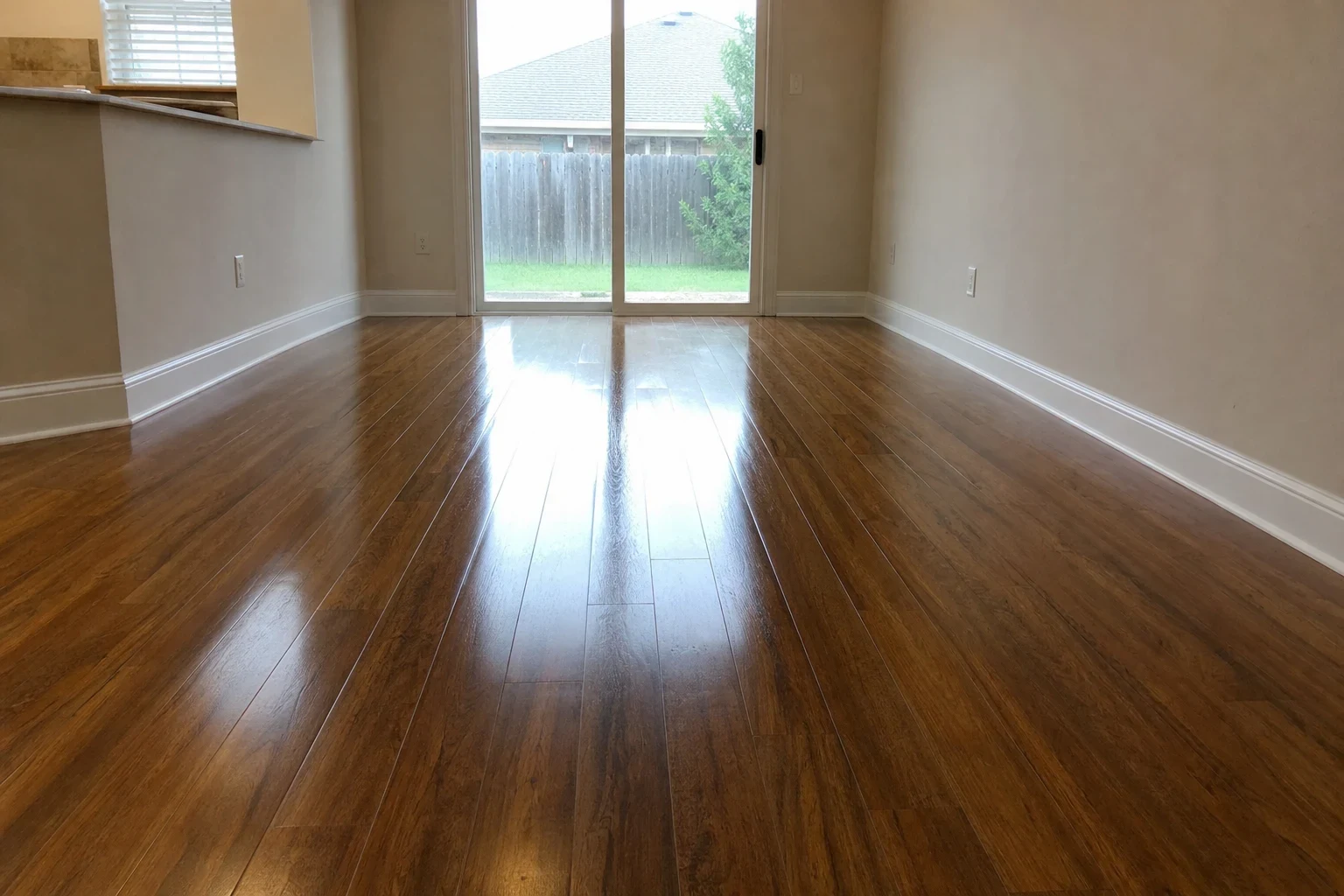
Tell us which rooms you are thinking about, and we will set up a visit to test the subfloor and talk through your options. You will know what we found before we recommend anything.