ServicesLaminate Flooring
Laminate Flooring in South Houston
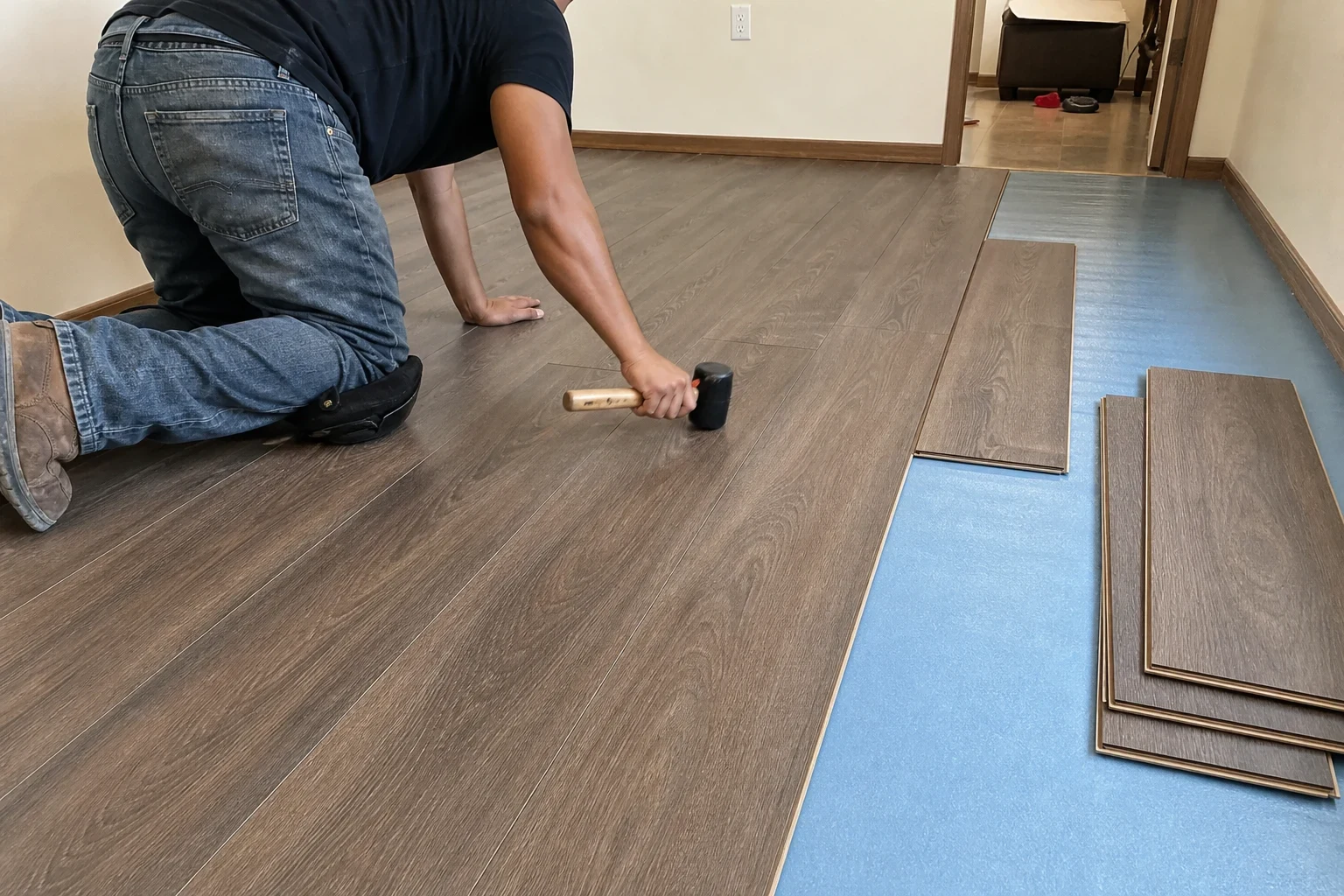
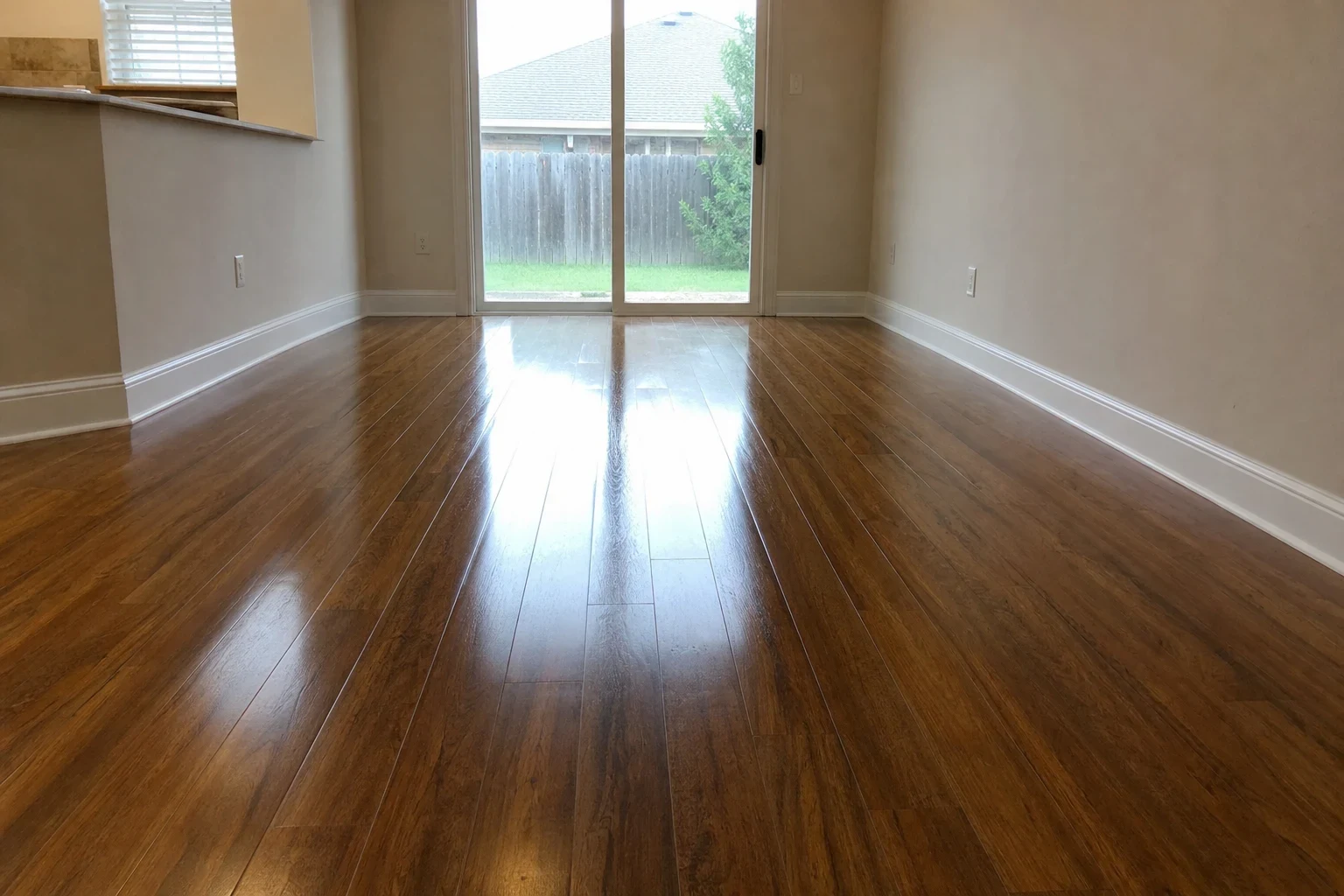
Laminate brings a wood look into busy rooms without the upkeep of real hardwood. Before we suggest a single plank, we inspect your subfloor and the floor you have now, explain what we found in plain terms, then install a floor that lies flat and stays tight at the seams.
A Good Laminate Floor Starts Underneath
Laminate is a floating floor. The planks click together and rest on an underlayment instead of being nailed or glued down. That makes it quick to install and easy to live with, but it also means the floor shows every dip, hump and bit of moisture below it. Most laminate failures we see come from what was under the planks, not the planks themselves.
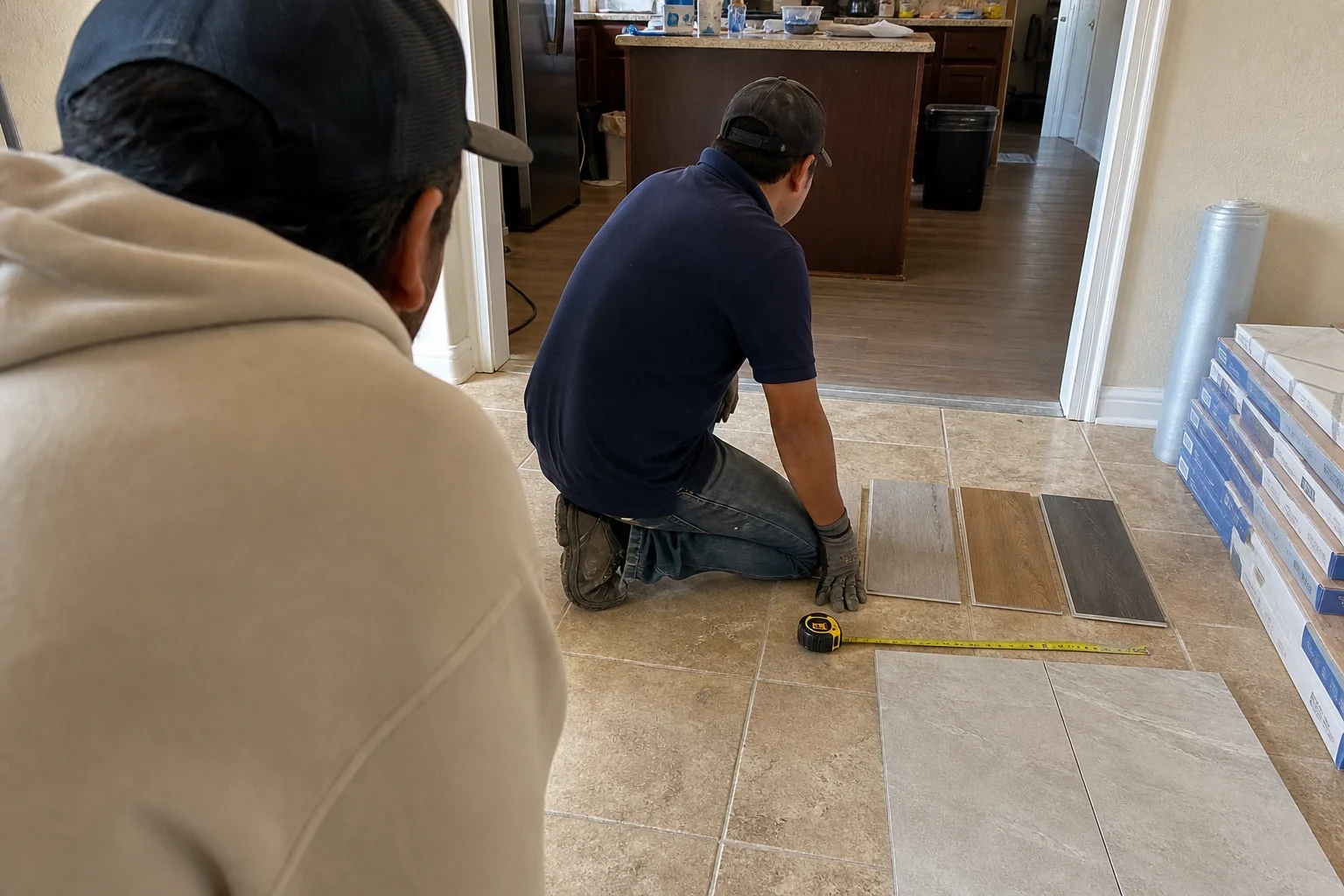
So before we recommend a product, we look. We check the slab or wood subfloor for flatness, test for moisture, and listen for hollow spots. Then we tell you what we found in plain words, including when laminate is not the best fit for a room and luxury vinyl plank would serve you better.
We have been in business 25+ years, and that time has taught us one thing above all: a careful look at the start saves you from a floor that peaks or separates a year later.
What Our Laminate Installation Includes
Subfloor and moisture check
We measure flatness across each room and test concrete slabs for moisture. You see the readings and hear what they mean before any decision is made.
Removal of the old floor
We pull up carpet, pad and tack strip, or old laminate and vinyl, and haul it away. If tile has to come up, we tell you first, since that changes the scope.
Leveling and vapor barrier
Low spots get patched and high spots ground down. On concrete we lay a proper vapor barrier under the underlayment, which matters in a humid Gulf Coast climate.
Careful layout and cutting
We plan plank direction and the first and last rows so you avoid thin slivers at walls. Door jambs are undercut so the planks slide under cleanly.
Expansion gaps, trim and transitions
Laminate needs room to move at every wall. We leave the right gap, cover it with baseboard or quarter round, and fit transitions where laminate meets tile or carpet.
Signs It May Be Time for New Laminate
- Peaking or buckled seams
- Joints that rise into a ridge usually mean the floor was pinned at the walls or moisture got under it. We find the cause before replacing anything.
- Swollen or chipped edges
- Laminate near sinks, dishwashers and entry doors can swell where water sat on the seams. Once the core puffs up, it will not flatten again.
- Gaps between planks
- Separating joints can point to a worn locking system or an uneven subfloor that lets planks flex.
- Worn carpet you are tired of cleaning
- Matted, stained carpet in a living room or hallway is one of the most common reasons people switch to laminate.
- Soft or hollow spots
- A floor that bounces or sounds hollow underfoot often has a dip below. We check whether it is a simple fill or a bigger subfloor issue.
How a Laminate Job Goes
- 1
Inspection at your home
We measure the rooms, check the subfloor and test for moisture. You get our findings and an honest opinion on whether laminate suits each space.
- 2
Clear written estimate
We spell out the material, prep work, removal and trim so you know what you are paying for. Nothing gets added later without a conversation.
- 3
Prep day
We protect walkways, move furniture where agreed, remove the old floor and level the subfloor. Some rooms need a day for patch to cure.
- 4
Installation and cleanup
Planks go down with proper gaps, then trim and transitions. We sweep, vacuum and walk the floor with you before we leave.
What Moves the Price of Laminate
Every laminate quote comes down to the rooms, the product and the condition of what is underneath. We price after the inspection, so the number reflects your actual floor. Here is what makes the biggest difference.
- Square footage and layout
- Open rooms go quickly. Closets, hallways and lots of doorways mean more cuts and more time.
- Subfloor condition
- A flat, dry slab needs little prep. Dips that need patching, or wood subfloors that need screws and repairs, add labor.
- Laminate grade
- Thicker planks and higher wear ratings cost more, as do water-resistant lines suited to kitchens.
- Removal of old flooring
- Carpet comes up fast. Glued vinyl or tile takes longer and creates more debris to haul away.
- Stairs and trim
- Stairs are measured and priced separately, and new baseboard or quarter round adds to the total. See our Stair Flooring page for how we handle steps.
Laminate Flooring Questions
- Can laminate go in my kitchen or bathroom?
- Kitchens can work with a water-resistant laminate and careful sealing at the edges. Full bathrooms with tubs and showers are a different story, and we usually point you to luxury vinyl plank or tile there. We will tell you which rooms we would not put laminate in.
- Why did my old laminate buckle?
- The usual causes are missing expansion gaps, heavy cabinets set on top of the floating floor, or moisture coming up from the slab. We look for which one it was so the new floor does not repeat it.
- Can you install laminate over my existing tile?
- Sometimes. If the tile is solid, flat and the grout lines are shallow, laminate can float over it. If tiles are loose or the added height causes trouble at doors and appliances, removal is the better call.
- How long will the work take, and can we stay home?
- Most rooms are done in a day or two, depending on prep. You can stay home; we keep work to the rooms involved and clean up as we go.
- Do you work outside South Houston?
- Yes. We install laminate across the surrounding area, including Pasadena, Pearland, Deer Park and League City. Our Service Areas page lists the rest.
Find Out What Your Floor Needs
Tell us about the rooms you want redone. We will set a time to look at your subfloor and give you straight answers about laminate.